Links I Use
Laravel bot protection for a live web platform: secured every email-sending flow with Google reCAPTCHA v3 while keeping the experience smooth for real users.
LaravelPHPGoogle reCAPTCHA v3SecurityBot Protection
Overview
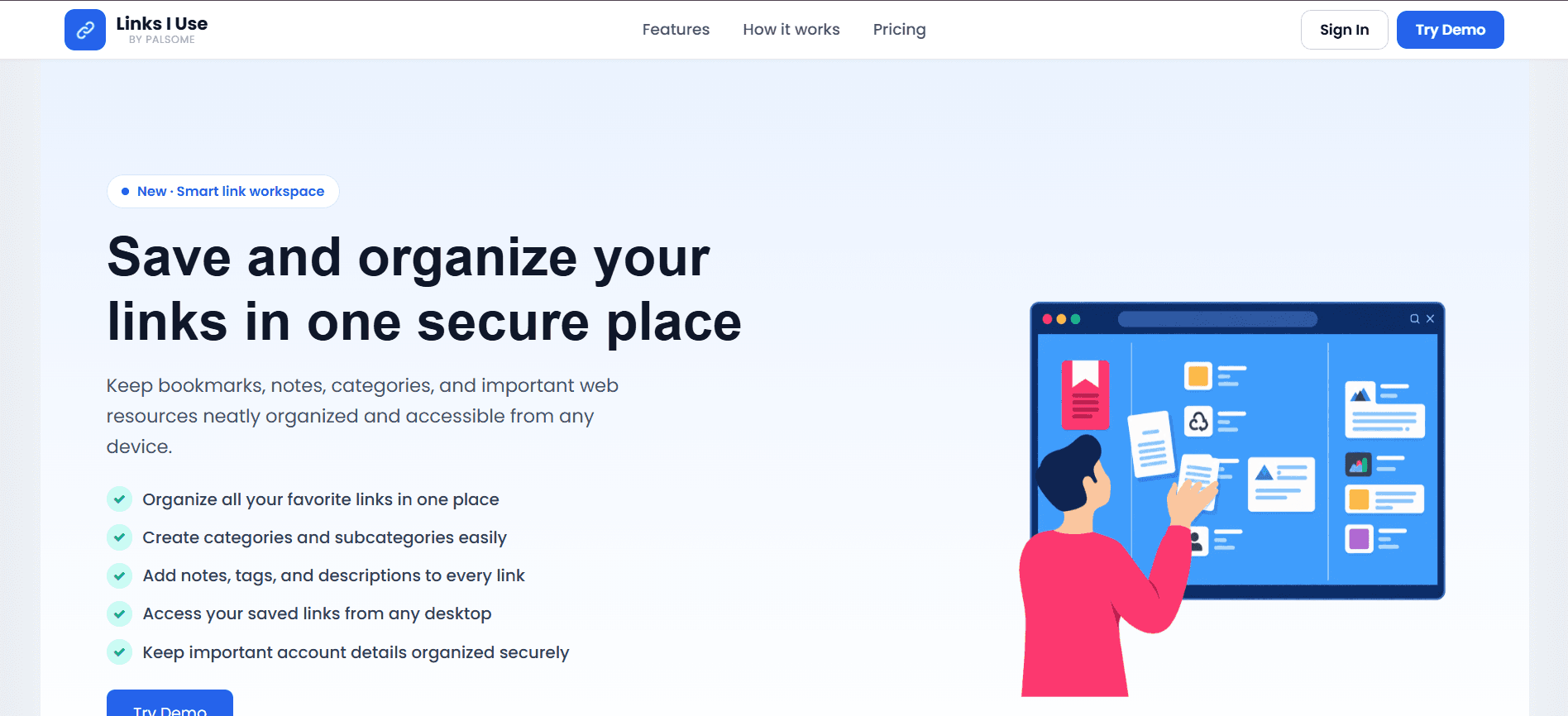
Links I Use is a live production project, and my main contribution was hardening it against automated abuse. Any feature that sends an email, like registration, password recovery, OTP delivery, or contact messages, is a natural target for bots: they can flood inboxes, burn through mail quotas, and create fake accounts at scale. I implemented Google reCAPTCHA v3 across every one of these entry points so that no bot can trigger an email, while genuine users continue to see a completely normal, challenge-free experience. The work involved auditing the whole application for email-triggering flows, integrating the reCAPTCHA token on the frontend, and validating it on the backend before any email is dispatched.
Challenges & Solutions
Challenge
Multiple forms on the platform send emails, including OTP verification, password reset, and contact messages. Without protection, a simple script could hit these endpoints repeatedly, spamming real users' inboxes, draining the mail quota, and hurting the sender reputation of the domain.
Solution
Integrated reCAPTCHA v3 on every email-sending entry point: the Register form, Forgot Password form, Resend OTP after register, Resend OTP after forgot password, the Guest/Demo to Real User conversion form, and the Contact form. Each submission now carries a token that is verified on the server before the email is sent.
Challenge
Flows like Resend OTP and guest-account conversion are easy to overlook because they are not the main forms, yet they still trigger emails. Leaving even one of them unprotected would give bots a backdoor to bypass all the other protections.
Solution
Audited the application end to end to find every place an email can be triggered, then added reCAPTCHA verification to each one. The rule I followed was simple: if an action sends an email, it must be verified first. This closed every gap instead of only securing the obvious forms.
Challenge
Bot protection had to be effective without hurting the experience of genuine users. Visible challenges like image puzzles or tick-box checkboxes add friction, increase drop-off on registration, and are especially annoying on repeated actions like resending an OTP.
Solution
Used reCAPTCHA v3's invisible, score-based approach. A token is generated silently in the background when the form is submitted, so real users never see a challenge, and the backend decides whether to allow or block the request based on the returned score.
Challenge
Generating a token on the frontend is not enough on its own. A bot can skip the browser entirely and call the endpoint directly, so trusting the client side would leave the protection ineffective.
Solution
Added server-side verification: the backend sends the token to Google's verification API, checks the success status and score, and only then proceeds to send the email. Requests with a missing, invalid, or low-score token are rejected before any email logic runs, which keeps the protection reliable even against direct API calls.